Opendoor Gets Another $20 Million To Simplify The Process Of Selling Your Home

It’s only been about three months since home-sales marketplace Opendoor has been open for business, but it is already making its market on residential real estate in Phoenix, Ariz. As it looks to expand into two new cities, the company has raised $20 million in additional funding led by GGV Capital.
Opendoor was founded by Khosla Ventures VC and former Square COO Keith Rabois and Movity founder Eric Wu to change the way real estate is bought and sold. For homeowners looking to move out of their homes, Opendoor offers a simplicity and speed of sale that is more or less unprecedented in the residential real estate market today.
By applying a certain amount of data analytics, Opendoor can very accurately determine the fair value of a home and quickly make an offer on it. That reduces the amount of time its takes to close a deal, while reducing the uncertainty associated with selling a house on the open market.
The average property sits on the market for more than three months (103 days!) waiting to be bought, and a number of home sales either fall through or get pulled from the market due to lukewarm interest. That’s not an issue with Opendoor, which can make an offer and purchase a home within three days of the seller entering information into its system.
Once that deal is completed, Opendoor handles all the traditional paperwork, inspections, and repairs necessary to make a home ready to be purchased. It goes through the process of getting a home sale-ready, lists it on various real estate sites, and deals with the time it takes to sell the property.
In its launch market of Phoenix, where Opendoor has been operating since December, the company is purchasing about one home each day, according to Wu. But it’s looking to expand quickly into two more markets — Portland, Ore. and Dallas, Texas.
To do so, it’s raised $20 million in a new round of funding led by GGV Capital, along with Khosla Ventures, the Mack Family, Thrive Capital, Caffeinated Capital, Sherpa Ventures, Haystack Fund, and Instagram’s Kevin Systrom. That financing follows a star-studded Series A round, which included too many big investors to name them all again here. GGV Capital managing partner Glenn Solomon, who has led investments in Pandora, Successfactors, Nimble Storage, Zendesk, Domo, and Square for GGV, will be joining Opendoor’s board of directors.
For Solomon, the investment was all about backing a “great team” that is tapping into a huge market opportunity. After all, he said, about 5 million homes change hands in the U.S. each year — but it’s not a great experience for anyone involved today.
“Anyone who sells a home knows that it’s a process that’s fraught with risk and there’s a high rate of homes that don’t even sell,” Solomon told me by phone.
But making things easier for sellers is just one part of the problem. While Opendoor is focused primarily on them currently, it seems clear that the company will eventually look more like a true marketplace, where buyers can also make purchases directly from it.
In the same way it’s built tools to provide more price transparency to sellers, Opendoor could make the buying process a lot more efficient. Doing so could save all sides a lot of time, and most importantly, save them money.
Of course, it will take them some time to get there. In the meantime, the company has a business that appears to be working, and plenty of money in the bank. There are worse situations to be in.
from TechCrunch http://feedproxy.google.com/~r/Techcrunch/~3/GNTncRZw66Y/
via IFTTT

LG Watch Urbane LTE runs a proprietary OS and lets you make calls without a phone
Ahead of the Mobile World Congress trade show, LG has unveiled an LTE variant of its fashionable Watch Urbane that will support calls over VoLTE without a phone, as well as NFC payments.
Unlike the Android Wear-based original, the LG Watch Urbane LTE will feature a proprietary OS that the company says is not webOS, which runs its smart TVs and was shown off on an Audi watch. It also has a walkie-talkie feature for group voice chats as well as an SOS button to quickly place a call to your contacts in case of an emergency.
It will also sport sensors for GPS and fitness tracking, as well as atmospheric pressure and heart rate monitoring. The watch will also support translate foreign languages via voice recognition. A 700mAh battery (significantly larger than the original Watch Urbane’s 410mAh battery) keeps the timepiece ticking.
LG will show off the device next week at MWC; hopefully we’ll get a chance to see how it looks and feels up close.
➤ LG Watch Urbane LTE (Korean) [LG Newsroom via The Verge]
from The Next Web http://feedproxy.google.com/~r/TheNextWeb/~3/Siek2f84_Hg/
via IFTTT
Gmail adds Burmese language support
Google has announced today that Gmail now supports Burmese across its interface, bringing the service’s language count to 74.
Gmail users in Myanmar will be able to choose between two virtual keyboards to allow for the various ways in which you can type in Burmese.

The company launched translation support for Burmese in December, and is encouraging users to improve translated content in the Myanmar language with a translate-a-thon event this Saturday in the capital of Yangon.
It’s interesting to see Google adding Web products for users in Myanmar, where only 10 percent of the population have a mobile device at present.
➤ An email from Gmail to the people of Myanmar [Google Asia Pacific Blog]
from The Next Web http://feedproxy.google.com/~r/TheNextWeb/~3/4jW4pzkTiCk/
via IFTTT
Nostalgia Overload: Toejam And Earl’s Creator Is Kickstarting A Sequel

Remember Toejam and Earl? It’s the game that taught the Sega Genesis-owning kids of the early 90s the value of a funky fresh bass track.
Now it’s back — that is, assuming enough people throw money at it on Kickstarter.
For those who never played it, Toejam and Earl was a top-down action game wherein the game’s namesake characters ran around randomly generated levels and tried to collect pieces of their wrecked spaceship. It wasn’t the hugest commercial success, but the game’s absurd humor, killer soundtrack, and crazy fun multiplayer helped to turn it into something of a cult hit over the years.
Greg Johnson, one of the two guys behind the original Toe Jam and Earl, has just launched a $400,000 Kickstarter campaign for a sequel he’s dubbed Toe Jam & Earl: Back In The Groove.
The quest: to make a Toejam & Earl game in the same vein as the first one, as opposed to the not-so-great sequels that followed.
You see, this isn’t the first time Greg has tried to bring more Toejam & Earl to the word. It’s not even the second.
Both times, though, decisions from above (read: the publishers) forced the games to stray from the roots that made the original a cult classic.
The proposed solution? Ditch the publishers, raise money on Kickstarter, build a game modeled after the first one.
Randomly generated levels? Check. Absurd humor? Obviously. Multiplayer co-op? Yep! And this time, it’s 4 player instead of 2. (“Toejam and Earl and two other dudes isn’t a very good name, though, so they kept it short.)
Will it work? Perhaps! Two hours after the launch of the campaign, it’s raised about $15k of the $400,000 it needs with next to no fanfare. It’s not exactly Pebble Time’s $500,000 in seventeen minutes” absurdity, but it’s a start!

Of course, this is by no means the first time a well known game maker of the 90s has turned to Kickstarter to fuel their latest efforts. Mega Man creator Keiji Inafune used it for Mighty No. 9. Earthworm Jim creator Doug TenNapel used it for Armikrog. Monkey Island’s creators raised over half a million for Thimbleweed Park. Tim Schafer’s DoubleFine raised a staggering $3.3M there. The list goes on and one.
Unlike many of the aforementioned, though, Toejam and Early’s creators apparently still hold the rights to their original creations — and thus can make a direct sequel, rather than a “spiritual successor”.
Greg and co. are focusing on building for just Mac, Windows, and Linux at first — presumably because building for the consoles can make things get complicated and expensive. “We hope to eventually put this onto all platforms but this will, of course, depend on funding and on getting arrangements set up with the platform vendors.”, the team writes.
The first Kickstarter tier that includes a copy of the game starts at $15, with the four-person team hoping to ship the game by November of 2015. You can find their Kickstarter campaign right over here.

from TechCrunch http://feedproxy.google.com/~r/Techcrunch/~3/UaWTA9tf63Y/
via IFTTT
Google Builds An AI That Can Learn And Master Video Games
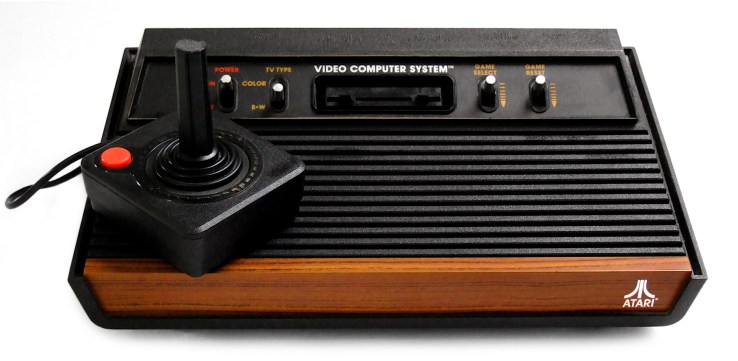
Google has built an artificial intelligence system that can learn – and become amazing at – video games all on its own, given just a simple instruction to play titles without any additional commands. The project, detailed by Bloomberg, is the result of research from the London-based DeepMind AI startup Google acquired in a deal last year, and involves 49 games from the Atari 2600 that likely provided the first video game experience for many of those reading this post.
While this is an amazing announcement for so many reasons, the most impressive part might be that the AI not only matched wits with human players in most cases, but actually went above and beyond the best scores of expert meat-based players in 29 of the 49 games it learned, and bested existing computer based players in a whopping 43.
Google and DeepMind aren’t looking to just put their initials atop the best score screens of arcades everywhere with this project – the long-term goal is to create the building blocks for optimal problem solving given a set of criteria, which is obviously useful in any place Google might hope to use AI in the future, including in self-driving cars. Google is calling this the “first time anyone has built a single learning system that can learn directly from experience,” according to Bloomberg, which has potential in a virtually limitless number of applications.
It’s still an early step, however, and Google expects it’ll be decades before it achieves its goal of building general-purpose machines that have their own intelligence and can respond to a range of situations. Still, it’s a system that doesn’t require the kind of arduous training and handholding to learn what it’s supposed to do, which is a big leap even from things like IBM’s Watson super computer.
Next up for the arcade AI is mastering the Doom-era 3D virtual worlds, which should help the AI edge closer to mastering similar tasks in the real world, like driving a car. And there’s one more detail here that may keep you up at night: Google trained the AI to get better at the Atari games it mastered using a virtual take on operant conditioning – ‘rewarding’ the computer for successful behavior the way you might a dog.
from TechCrunch http://feedproxy.google.com/~r/Techcrunch/~3/E7U3nPr1f_o/
via IFTTT


